How to use this color blind test
To take a daltonism test online, first check that you can see the whole plate comfortably. Keep your usual prescription glasses if needed, but remove tinted lenses. Disable settings that warm or recolor the image, including night mode and accessibility color filters. Choose comfortable brightness and avoid glare. These adjustments help keep viewing conditions consistent; they do not calibrate your screen.
Try the demonstration first. Enter one or two digits with your keyboard or tap the number buttons, then choose Next. Enter also submits an answer. Select “No number visible” if you cannot make out a figure, or Skip if you prefer not to answer. Those choices are recorded separately; an empty input is not an answer.
Continue through 20 plates without a time limit. This daltonic test records recognition, not reaction speed. Retry image reloads a failed image, and answers stay disabled until it is ready. If you end early, the summary marks the remaining plates as unvisited.
What this red-green color blindness test covers
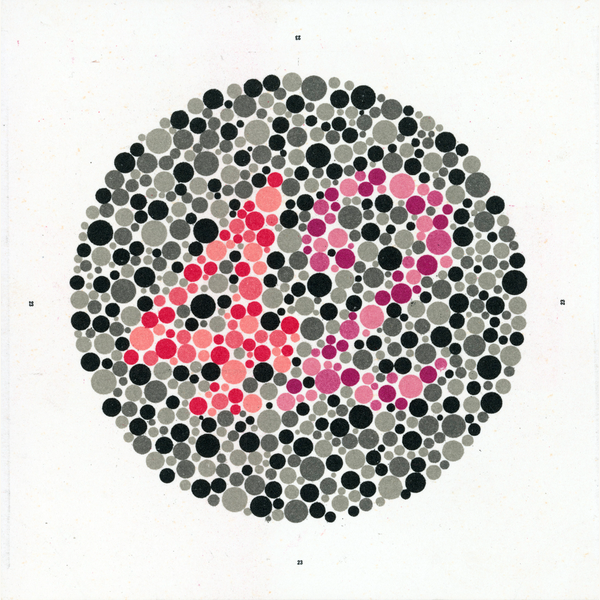
When you take this daltonism test online, you view historical Ishihara plates from two collections. Some numbers and patterns recur across editions. As a red-green colorblind test activity, it lets you compare what you saw with the reference response for each plate. These reproductions cannot replace a professional color vision test.
A red-green color blindness test focuses on patterns used to explore red-green perception. These reproductions do not establish whether you have red-green color vision deficiency, identify a protan or deutan type, or measure severity. They also cannot tell you whether you have a blue-yellow color vision difference. An eye-care professional can choose suitable methods for those questions.
Paper, photographic lighting, image resizing and your display all influence the colors you see. Using the daltonism test online on a phone may therefore look different from viewing it on a laptop. For any browser-based color vision test, keep the same brightness and filters throughout. If you change them, use Display settings changed to leave a note with this session.
Understanding your color blind test summary
After you finish the daltonism test online, your summary lists reference matches, numerical entries, No number visible responses, skipped plates and unvisited plates. The demonstration is reported separately. Some plates use No number visible as the reference response. For this red-green color blindness test activity, the totals describe your responses to these images only.
Open the plate-by-plate review to compare each response with its reference response. A matching answer does not confirm normal color vision; a different answer does not diagnose color deficiency. A professional color vision deficiency test requires appropriate administration and interpretation. Here there is no pass mark, severity band, medical certificate or leaderboard. If the demonstration was difficult, check the viewing setup before another attempt.
A display-change note records an adjustment without explaining why an answer differed. Start again clears both the answers and that note. Familiarity can make repeated plates easier to recognize, so a higher match count does not show that your color vision improved. Treat the color blind test summary as a record of this session, rather than evidence of a lasting change.
Online testing and a professional color blind exam
A daltonic test may use recognizable numbers, while other methods ask you to arrange hues or compare lights. Taking a daltonism test online here gives you a small image-recognition activity, not a professional color blind exam. A color vision test is only as informative as its materials, viewing conditions and interpretation; the name alone does not establish what a result means.
The National Eye Institute describes color plates, hue arrangement and an anomaloscope among professional approaches. An appropriate color vision deficiency test depends on the person and purpose. Do not use this browser activity to decide eligibility for work, driving, aviation or another regulated task. Ask the relevant professional or organization which examination they require.
Frequently asked questions
Is this color blind test free?
Yes. You can use this color blind test free of charge, including the demonstration, all 20 plates and the full response summary. There is no account, email requirement or paid result to unlock in this red-green colorblind test activity.
Can I take a colour blind test on my phone?
Yes. You can take this daltonism test online using touch input, number buttons or a physical keyboard. Keep the entire photograph visible. A phone’s brightness, display settings and surrounding light can affect a color vision test; mobile access does not make the result a clinical assessment.
What if I cannot see a number?
Choose No number visible instead of guessing, or Skip if you prefer. This color blind test keeps those responses separate from numerical answers. You can inspect the totals and the individual plates after ending the activity.
Is this an official Ishihara examination?
No. This colour blind test displays credited photographs of historical charts for educational recognition. It is not a certified digital edition or complete test battery. A daltonic test based on reproduced photographs cannot replace an examination by an eye-care professional.
Are my answers saved or shared?
When you take the daltonism test online, your answers stay in the current page’s memory. They are not submitted or saved in browser storage. Resetting or reloading clears them. There is no public score, result-sharing link or leaderboard.
Can this replace a professional color blind exam?
No. The summary cannot diagnose color deficiency or establish its type or severity. If you want an assessment, an eye-care professional can select and interpret a suitable color vision deficiency test. Browser match counts do not provide that assessment.
Image sources and further reading
The images come from Science Museum, London / Wellcome Images and the National Diet Library’s scan of Ishihara’s 1920 edition. We resized them for screen use without adjusting the colors. You can open the source for each plate in your completed review.
Read the National Eye Institute's Testing for Color Vision Deficiency for an overview of professional methods. For a different browser activity, try our Reaction Time Test, which measures responses to a changing visual signal rather than color vision.
Full image credits and reproduction details · Wellcome image license · 1920 edition public domain record